A_D_E_P_T7 hours ago
Glass half full, I suppose. Germany is in the grip of an unusual and prolonged drought -- clear skies, intense daytime heat, no rain.
> https://www.bbc.com/news/articles/c78gn8zvrx4o
I'm near Graz, in Austria, where we're also in the middle of a drought and in truth I can't remember a summer as hot as this one...
ajmurmann6 hours ago
I think the biggest impact for Germany is gonna be economical from shipping. Much of Germany's industry is along the Rhine and they get their raw materials via barge on the Rhine. The Rhine is already close to all time low which reduces capacity and increases cost. Usually low water happens between August and November. It was already close to record low in July! I wouldn't be surprised if shipping will have to stop entirely some time this year.
I watched a report that has an interview with the CEO of a cereal factory. They get all their wheat via barges. He said they already paid €100k extra this year for low-water surcharges for shipping and that they'd need 6,500 trucks annually if they'd replace the barges with trucks.
ricardobayes4 hours ago
Yes, although it's nowhere near as bad as the Danube, whose level sits at currently -93cm [0] - a record low which meant the nation's nuclear reactors had to be scaled back to just a single turbine and was only a few centimeters away from having to completely shut down as the intakes for the cooling pump sit at a certain level - this water level was apparently mentioned as a 1 per 100.000 year event in the risk management.
[0]: https://www.vizugy.hu/?mapModule=OpGrafikon&AllomasVOA=16496...
eigenspace5 hours ago
Yeah. Bad timing that this also coincides with a period where the rail system is in chaos, and running beyond capacity due to overdue upgrades.
f6v4 hours ago
I think you can select any day, week, or month and the rail system in Germany will always be in chaos.
eigenspace4 hours ago
That was not generally true before the system upgrades started. It's been true for a while though.
I didn't mean short-term bad timing, I mean it's bad that we're getting hit by increasing droughts in the same decade the train system hit its breaking point and needed fixing.
ffsm84 hours ago
It's been true for at least 16 years though, admittedly - it's gotten even worse since Corona
eigenspace4 hours ago
Neglect of the rail systems has been true for over 16 years, but there was distinctly less chaos before 2020, because the systems were just left in operation as they rotted.
Post pandemic, it was decided that they had to fix it, at the same time that there's been a sustained surge in ridership. The operations to fix the rail network combined with decay, combined with higher ridership than ever before is what causes the chaos.
kvemkon4 hours ago
On news there was a message from Siemens about 500 t turbines, which can be transported best only by Rhine.
toasty2286 hours ago
I was going to write that too, same thing in France: warmest month ever recorded since 1900, 35% sunnier than usual, large fires in places which rarely had small ones in the past, 4 consecutive heat waves in a bit more than a month... nothing to be happy about
kykat7 hours ago
It's truly unbelievable hot right now, this "good news" of solar production is pretty sad actually
karussell3 hours ago
Hot does not necessarily mean good solar production. Solar production in winter can be equally good (although days are shorter).
Also the efficiency of panels decreases with higher temperatures.
comrade12343 hours ago
I'm in Zurich and twice now the weather apps radars said it was raining heavily right where I am but no rain was making it to the ground. Instead it was unbelievably humid. I think the rain was falling but evaporating before it could reach the ground.
RGammaan hour ago
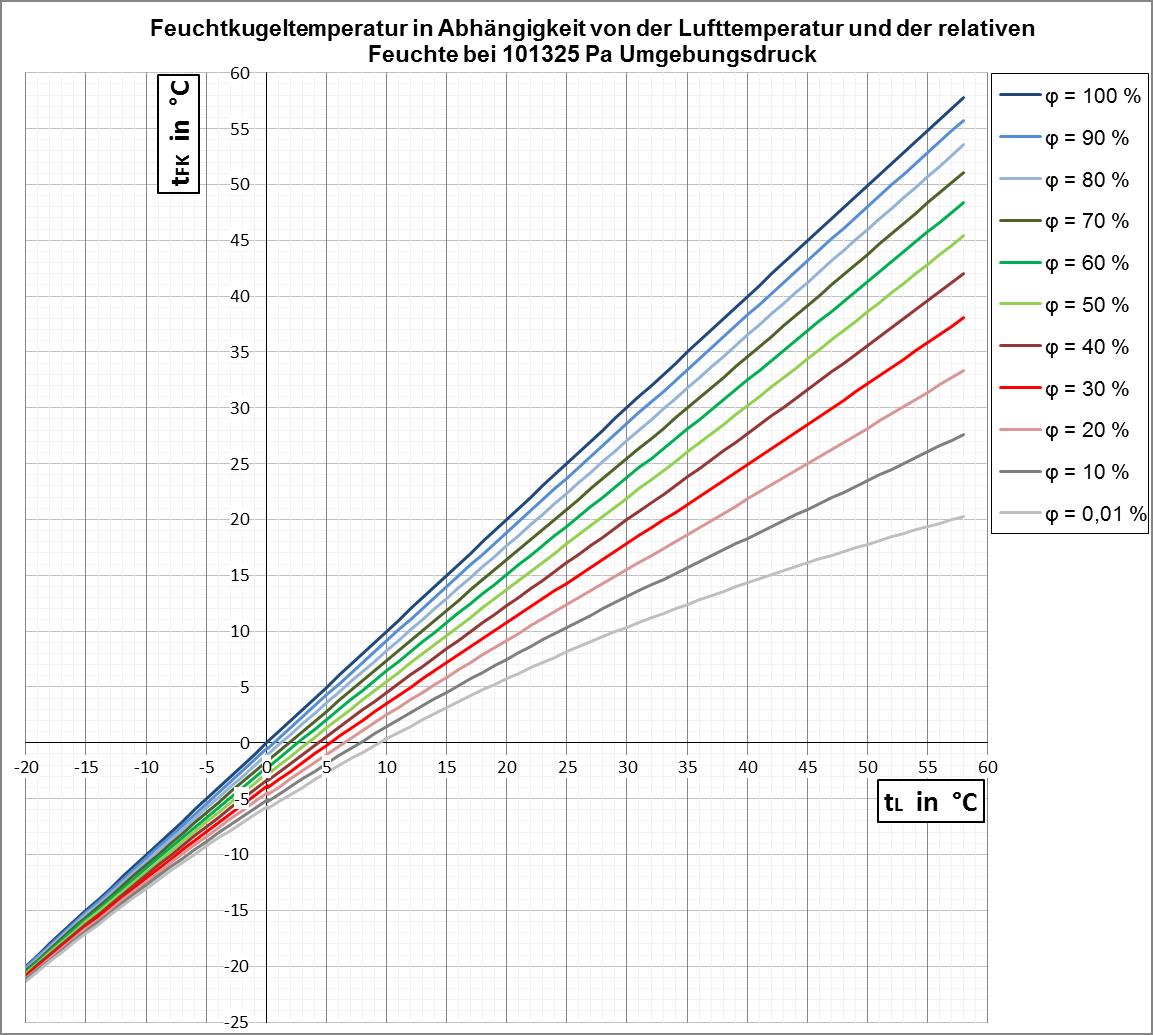
A few weeks ago we had 30 degC indoors at 70% humidity after a brief thunderstorm. That felt... stressful - at a wet bulb temperatures of only 25 degC, see https://upload.wikimedia.org/wikipedia/commons/f/fc/Diagramm.... Apparently dangerous/lethal wet bulb temperatures begin at 30/31 degC and now I can see why.
Also what you describe is called "Virga".
PaulDavisThe1st4 hours ago
The comparison with France right is interesting. They are shutting down nuclear reactors because the drought means they don't have enough water to cool the reactors.
Base load, eh?
MomsAVoxell5 hours ago
Vienna, Austria, checking in .. I'm Australian, been here for decades, this is definitely the warmest I've experienced it. I love it though, feels like home. ;)
A_D_E_P_T5 hours ago
Warmest anybody in Vienna has experienced, haha.
Today the all-time record in Austria was broken with 40.8°C (105.4°F) in Vienna.
onraglanroad4 hours ago
I can't find it just now but I'm sure I read that record was broken later today with 41.3C.
MomsAVoxell5 hours ago
Thank the wisdom of the forefathers for getting the Donau under control and giving us Wieners a great place to sit out the heat.
Aldipower7 hours ago
Southern Germany to be more precise. Northern Germany is slightly affected, but nothing unusual.
ben_w7 hours ago
https://www.hitzewarnungen.de/index.jsp
https://weatherkit.apple.com/alertDetails/index.html?ids=081...
I'd describe it a little differently myself.
Aldipower6 hours ago
The OP talked about drought, not current heat.
Dro(a)ught monitor: https://www.ufz.de/index.php?de=37937
MomsAVoxell5 hours ago
Drought, not draught. A bit of draught would be kind of nice about now.
Aldipower5 hours ago
Thanks. Yeah! :-D
poetaster5 hours ago
The Deutsche Wetter dienst is just as 50/50 as any meteorological service. May/June were atypically warm, but rainfall sufficient in the north east. July has been mixed extremes from Saxony to the Baltic with sufficient rain that we have not had to water the Garden. 320km north, Grandmother territory, same. The droughts of previous years were much more destructive. We'll see when the crops come in.
atoav5 hours ago
Yeah? I live in Northern Germany for more than a decade now and in the past months I have witnessed multiple of the hottest days during these ten years, including one where my thermometer measured a whopping 37°C at midnight.
Aldipower5 hours ago
You are the second one who isn't referring to the OP. It is about drought, not heat!
toomuchtodo7 hours ago
Europe is only going to get hotter and more dry for the foreseeable future.
Extreme Heat Has Transformed What Summer Means Across Generations in Europe - https://www.nytimes.com/2026/08/01/world/europe/europe-summe... | https://archive.today/XsX2m - August 1st, 2026
Europe’s Heatwaves Are a Taste of the Climate Costs Yet to Come - https://www.bloomberg.com/news/newsletters/2026-07-27/europe... | https://archive.today/AqWba - July 27th, 2026
Why Is Europe Warming Twice as Fast as the World Average? - https://www.bloomberg.com/news/articles/2026-06-26/europe-he... | https://archive.today/o68OH - June 26th, 2026
toasty2286 hours ago
> Why Is Europe Warming Twice as Fast as the World Average?
You'll find articles about every single land mass "warming up faster than average"... that's because the average include the 70% of the planet that is covered by oceans, these don't warm up nearly as fast as landmasses. We're all pretending we'll manage +1.5c or +2c by 2050, and in the average Joe's head that not much, in reality we're already fucked, July was +4c above normals in France, and we're in 2026 not 2025.
Australia is Warming Faster than Global Average: https://www.statista.com/chart/20404/mean-annual-temperature...
China warming faster than global average: https://www.chinadaily.com.cn/a/202607/02/WS6a462fd5a310986e...
Europe’s warming accelerates beyond global trend: https://defence-industry-space.ec.europa.eu/europes-warming-...
Warming in Brazil is already higher than the global average: https://www.wwf.org.br/en/?90683/Climate-Warming-in-Brazil-i...
Africa is warming more rapidly than the global average: https://www.cseindia.org/africa-is-warming-more-rapidly-than...
java-man6 hours ago
Sabine explains: https://www.youtube.com/watch?v=j9cDpdTlQrc
[deleted]5 hours agocollapsed
JimmyBiscuit6 hours ago
[dead]
spwa47 hours ago
TLDR: 3 reasons. First the quickest warming is actually the poles (technically the south pole) which means the North pole cools Europe less. Europe's reduction in CO2 and other pollutants output, cause both more sunlight to hit the ground in Europe and make the likelihood of big airflows coming from the South (ie. Sahara) larger.
And yeah, my read is that this is more arguments in favor of: it doesn't matter which way CO2 evolves, we'll need to take control over the climate if we want cities to remain where they are.
actionfromafar6 hours ago
We could start by running container ships on High Sulphur Fuel Oil. Same CO2, more cushion against Sun Rays.
fhdkweig6 hours ago
We stopped high sulfur when we realized it was causing acid rain. CO2 is also acidifying the oceans, so there aren't a lot of things we can pump into the atmosphere without consequence. Best to avoid doing that altogether.
spwa46 hours ago
We won't stop pumping CO2 into the atmosphere (Germany, India and China actually increased coal burning in 2026, in all 3 cases despite all the good news about solar installations). Also we can't prevent fossil fuel producers from digging up fossil fuels.
And, because of entropy, reducing CO2 already in the atmosphere is a non-starter. For one thing, one can reasonably assume that would at minimum require doubling human energy output (because unmixing costs a lot more energy than mixing)
I mean if you put the belief behind the whole CO2 reduction in words, it's like this: if we slightly reduce CO2 output (not stop, reduce by single digit percent), we won't have to adapt. And if you put it like that it becomes easy to see: "no way in hell that's going to be true".
So there's not much of a choice: geoengineering it is. Next question: which method?
ricardobayes4 hours ago
Germany's output is almost irrelevant in this context: it amounts to a mere 1.4% of the global output.
To add to that: there are no good alternatives to coal as the stabilizer in a renewables-fed grid, for Germany. They don't have hydro and don't have nuclear. Even Spain now runs some coal despite having near-100% renewable grid for a year. That big blackout was a big lesson for all grid operators. Please don't shame countries for running a small percentage of their grids on coal.
throwaway20374 hours ago
> there are no good alternatives to coal as the stabilizer in a renewables-fed grid, for Germany.
tialaramex3 hours ago
> Even Spain now runs some coal despite having near-100% renewable grid for a year.
In fact Spain has less coal now than it did in 2025, or 2024, or 2023 and so on.
And no their grid isn't "near 100% renewable", they do have a lot more than most European countries but they have large gas imports too to run some of their conventional thermal power plants - what they're getting rid of, sensibly, is coal.
There's a 4x seasonal swing between summer and winter for Spain's solar power, and obviously the maximal swing (clear summer's day versus overcast mid-winter) is much larger, but they're nowhere close to being rid of fossil fuels even in July, much less January.
This whole "blackout was caused by renewables" stuff was crap when it was first spouted and didn't get any more plausible once we had more information.
tonfa3 hours ago
> Germany's output is almost irrelevant in this context: it amounts to a mere 1.4% of the global output.
Conveniently Germany is about 1% of the world population. You realize that if most countries use the same argument nothing ever change? (It's only 1% how can it make a difference)
onraglanroad5 hours ago
I don't think it's as dire as you're supposing. I hadn't expected the rollout of renewables and the growth of EVs to be as swift as we've seen.
If we can cut emissions entirely then that's the first step. Next devote 5% of energy generation to CO2 removal and we'll take out a year of 100% emissions in less than 20 years. We don't need to go back down to 280 ppm, something like 320 would be fine. It's a long term project but it can work.
Need step one first though.
rawgabbit6 hours ago
Well... the holy grail is something that traps CO2, slows down hurricanes-typhoons, slows down desertification, makes urban heat sinks more bearable. What that could be, I have no idea.
spwa45 hours ago
You are obviously referring to trees. So assuming that's what you mean: that won't work.
https://climate.mit.edu/ask-mit/why-dont-we-just-plant-lot-t...
Trees quickly reach equilibrium at which point CO2 out equals CO2 in. While they can sequester some CO2 while growing, they also generally cause an albedo increase (forests trap heat). So, for arguments sake, the opposite would actually help more: destroying forests reduces albedo reducing the planet's heat uptake, while not releasing most of the CO2 in the atmosphere, in fact, that causes it to get flushed into the ocean and it won't come back for millenia at least. Despite appearances, forest fires actually help against global warming. But not much.
In other words: right now to merely pause global warming we'd have to stop 99.7% of CO2 usage. If every square meter of the planet was covered in forests, merely to stop global warming from getting worse every year we'd have to stop ... 99.7% of CO2 usage (maybe 98% would do for 2-3 years while the trees are growing). And that's disregarding the massive albedo increase.
Also, global warming is causing massive forest expansion worldwide ... and that's making global warming worse, not better. If countries started destroying the many forests that have grown since 1900, that would help.
You want a suggestion that would actually do something? Seeding the oceans would help. It would mean global warming can be paused by a mere drop of 92% of fossil fuel usage, a big increase, at the cost of a HUGE loss of oceanic biodiversity. So I hope it's clear that while that is a far better suggestion, it is very far from a solution, and doesn't come without costs. Besides, if the climate warms further, my bet is that the oceans will "seed themselves" more and more.
I'm sorry to repeat, but no: the planet will not help us and stay static and stop warming (or even go back to normal warming) if we just "stop destroying nature". And building a few parks in cities, like it seems your real suggestion is, will do nothing at all.
ricardobayes4 hours ago
> the oceans will "seed themselves"
Yes they already do, as evidenced by the sargassum that wrecked this season for Florida and Mexico.
citrin_ru5 hours ago
> We stopped high sulfur when we realized it was causing acid rain
Coal AFAIK a bigger source of acid rains and world has not stopped using coal.
ajmurmann6 hours ago
I would a well. Unfortunately, it seems that deliberate geoengineering always brings up concerns from people who think it's more ethical to just state at the lever as the trolly goes by. I partially blame the legal system. There won't be a lawsuit about not having deliberately spread more sulfur oxide.
LeBit7 hours ago
Yeah, but one time in 1389 there was a heat wave! /s
RandomLensman6 hours ago
Somewhat similar to 1992, which had a very hot August and 2nd half of July.
dyauspitr6 hours ago
[flagged]
lava_pidgeon6 hours ago
Either you are a super human walking in water bowling water.
Or some US america who does not get fact that this context is talking about German Energy and the European heat wave and Fahrenheit is not used any metric in this part of the world. I considered especially rude that you assume the reader should convert the value though Fahrenheit is mostly used in USA.
probably_wrong5 hours ago
> Yeah I was in Europe for a month last month and this summer was the best ever.
I imagine you don't intend it like that, but last month killed an extra five thousand people in Germany alone [1], more than one thousand of them in a single day [2].
"People may have died and the economy may be in trouble but my summer was amazing" is not the best take.
[1] https://www.dw.com/en/germany-june-heat-wave-linked-to-5000-...
dyauspitr3 hours ago
Both things can be true and I’m not commenting on the sad loss of life when I’m talking about something shallow like my vacation.
That being said, people have been living in 40C+ weather for thousands of years and it irks me when people complain about essentially really nice 35C weather because advanced developed economies haven’t taken any steps to mitigate any of this.
sajithdilshan7 hours ago
To be frank the best summer I’ve ever had in Berlin. Everyday warm and sunny and love it.
f6v4 hours ago
You get completely drenched in sweat if you take the metro or S-bahn even at 30 degrees. There's no AC there. It's just miserable to commute. Also, most buildings don't have shutters and are not designed even for high 20s.
Berlin is an absolutely miserable place in this weather if you commute or just trying to sleep at night. Like, you can't efficiently cool the apartment down if it's 20 degrees at night and there's no wind.
sajithdilshan4 hours ago
I agree, that's a total failure of the Berlin government, they even ordered new U-bahn without A/C. As for S-bahn, most are air conditioned. I take the ring bahn to work and it's ACed.
There was one day it didn't cooled down at nice for this year (when day temperature went close to 40 degrees). Other than that, for I sleep with all windows open and I create an airflow with two fans. The apartment gets cooled during night and during the day I just keep the curtains closed. It hasn't gone above 25 degrees inside the apartment during the day time.
rsynnott4 hours ago
> they even ordered new U-bahn without A/C
AC is fairly problematic for narrow underground tunnels. This is one upside of the massive 9m diameter tunnels being used for a lot of new underground lines; way easier to ventilate. But, ah, not something you can really retrofit.
It could be worse, however: https://en.wikipedia.org/wiki/London_Underground_cooling
sajithdilshan3 hours ago
That’s kinda incompetent excuse in my opinion. There are many other ways they can cool down the underground stations and trains. Would be expensive, but doable. However, given the track record of constructions in Berlin it would take like 100 years to do it for all Ubhan lines.
throwaway20374 hours ago
> Like, you can't efficiently cool the apartment down if it's 20 degrees at night and there's no wind.
rsynnott5 hours ago
I was there last week. It was 37 degrees one day. Not most peoples' idea of a good time.
sajithdilshan4 hours ago
There was just one day with 37 degrees and it was a wonderful day spent by the a lake for me. If you live in Berlin you'd actually start to appreciate those days because if we're lucky we'd get like max. two weeks of sunny warm days and rest is rainy, cold, gray depressing weather
adrianN5 hours ago
People are literally dying due to the heat.
sajithdilshan4 hours ago
So what? People die everyday due to many reasons. Should I not supposed to enjoy life because people are dying?
toasty2286 hours ago
In 2026 it should be criminal to have such stupid opinions about climate change, the only valid reason to have such takes is if you're a boomer about to kick the bucket.
What's next? "BaCk iN mY DaYs SumMeRs WeRe HoT ToO" ?
sajithdilshan4 hours ago
Are you one of those people that if other person doesn't have the same opinion as yours they are nazis, climate deniers and should be killed? So much for being entitled to have ones own opinion
toasty22842 minutes ago
I know we're on a vibecoder shitposting forum but come on.... this "opinion" isn't even worthy of sharing to your friends after one too many helles. That's the kind of shit my grandpa would say after drinking too much at dinner. It's a serious topic, nobody cares you liked it when it was 30c in Berlin while the rest of the country is either in "extreme" or "very serious" drought
mitthrowaway26 hours ago
I don't think any opinions should be criminal, but some deserve downvotes.
sajithdilshan4 hours ago
Are people that bitter? like someone enjoying the summer weather deserves a downvote?
[deleted]3 hours agocollapsed
umpalumpaaa7 hours ago
Germany has still one of the highest electricity and energy prices among developed nations which tremendously hurts its industrial base. That has to change too unless this cannot really be called a success I think.
mertbio6 hours ago
The electricity prices for the industry are around the same since 2014: https://www.bdew.de/service/daten-und-grafiken/bdew-strompre...
AlexandrB6 hours ago
No they aren't, it looks like the prices doubled and the government significantly cut taxes to hide the increase. That's not to mention the 3 year price spike during 2021-2023. Who's paying for the lost revenue from the tax cuts?
mertbio6 hours ago
That doesn't change the fact that the prices didn't change for the companies therefore OP's argument about this hurt the companies doesn't have any basis.
umpalumpaaa6 hours ago
Yeah and the tax reduction will end in 2028. What I said still stands: German electricity prices for the industry are and will be one of the highest in the world.
tfourb5 hours ago
The tax reduction will almost certainly be extended and not be allowed to sunset. Industry electricity costs are more or less in line with other highly developed countries around the world and will remain so. Also, many larger industrial companies do not source their electricity from the common grid, but have dedicated power plants and increasingly their own investments in renewable energy production.
umpalumpaaa3 hours ago
No company invests billions into industry projects with that kind of political uncertainty. You can see it in the numbers: BASF stopped basically all investments in Germany. You cannot bet your whole company on a tax cut that was recently introduced and is already scheduled to disappear.
tfourban hour ago
Managers bet their companies on more stupid stuff all the time. Elon Musk just bet SpaceX and Twitter on datacenters in space …
In the political reality of Germany there is literally 0 chance that these tax cuts won’t be extended. Low investment by BASF has many reasons, but their inability to get politicians to extend that tax cut isn’t one of them.
tonyedgecombe6 hours ago
The further we go down the renewables route the less we depend on despotic states for our energy.
Energy may well be cheap in the US but you have been paying for that for decades through military misadventures in the middle east.
Lord-Jobo6 hours ago
It’s not possible to truly estimate what our military costs would be without those conflicts, but I would be interested in our energy costs if you incorporated the military costs into that. I’m willing to bet we pay more than nearly anyone else if you lump it in relatively fairly.
hunterpayne5 hours ago
The GWOT was 7% of the US military budget. Also, the US doesn't get oil from the Middle East anymore. Its been about 10 years since we did.
bradfa6 hours ago
We've gotten pretty good at digging holes in the ground and there's a lot of existing energy down there under our land (and near-by water). So yes, we've certainly had misadventures in the middle east, but we've also embraced the "drill baby drill" mantra of late.
Texas is probably our national leader in terms of deploying solar and wind power, which feels ironic but is totally rational and logical.
clarionbell6 hours ago
Who is making all those solar cells and batteries? I'll give you a hint, it's not a European country.
toasty2286 hours ago
> The further we go down the renewables route the less we depend on despotic states for our energy.
80% of solar panels/batteries/windmills are made in China. We wouldn't even be able to make them without fossil fuels in the first place. Not even talking about the electronics that is needed
eigenspace6 hours ago
German wind turbines largely don't come from China, but even if they did, the difference is that if China stopped selling us solar panels, batteries and wind turbines, the existing infrastructure would continue to function for decades to come while we work out a domestic replacement supply chain.
This is in stark contrast to fossil fuels, where it's infeasible to stockpile more than a few months of usage, and if suppliers turn off the tap, you're at their mercy almost instantly.
If China stopped supplying solar panels or batteries, it'd spark a frenzy of activity and demand for locally produced replacements, and there would be enough time for those to come online.
hunterpayne4 hours ago
The rare earths do come from China and that's where most of the environmental damage they cause happens. Rare earths can be mined almost anywhere. They aren't rare but they also aren't concentrated because they aren't water soluble. They are mined in places that don't care about environmental damage, not in places where specific geologic conditions exist (like everything else except AL). Also, you need them to make generators. When you put those generators in wind instead of in hydro or nuclear, you waste them. This is because they will generate 6 to 9 times as much power in hydro or nuclear plants as in a wind turbine.
mrob4 hours ago
Big generators in power plants use alternators with field windings, not permanent magnets. Wind turbines use either permanent magnet generators or induction generators. Permanent magnets generators are more efficient, especially at low wind speeds, but we can do without them if necessary.
eigenspace4 hours ago
The generators are not the expensive or hard part of building hydro or nuclear, so I have no idea why you're making that comparison.
Wind power is an incredibly cheap form of power.
Your point about rare earths is more or less covered by my previous comment about solar panels and batteries.
Besides, rare earths is actually a supply chain that's being rapidly de-risked from China as we speak anyways.
f6v4 hours ago
> it'd spark a frenzy of activity and demand for locally produced replacements
Now you're just being funny. The reason Chinese solar outcompeted European solar is because China can produce at a lower cost. Yeah, Germany could theoretically produce solar panels in required quantities. However, the price is going to be higher. Which means electricity is going to be more expensive. And expensive electricity is one of the problems for the German industry. Let's not forget that many enterprises will simply not survive while the solar production is ramping up.
eigenspace4 hours ago
The reason Chinese solar outcompeted European solar is partially that China has real lower costs, but was more because China had way way way more appetite for massive subsidies to dominate the market.
They took over the solar market from Germany after Germany foolishly stopped subsidizing it and almsot overnight killed the thriving domestic solar industry.
Chinas solar panels are almost surely being sold internationally for less than they cost to make. If China stopped selling them and domestic producers sprang back up using techniques they've learned from the ongoing solar panel 'recycling' programs, the domestic solar panels would surely be a lot more expensive than Chinese panels, but they'd also almost certainly be cheaper than fossil fuels, and would find a place in the market.
Besides, the cost of panels isn't even the expensive part of solar installations anymore. The expensive part is the land, grid connections, and installation labour.
KellyCriterion5 hours ago
20 years ago, Germany was among the topleaders in Solar Research & Manufacturing, the Government back then killed the opportunity for they country.
eigenspace6 hours ago
Germany's electrical prices are mostly in line with it's neighbours, not super high. If a company makes good usage of batteries, they could actually have quite low prices since the electrical price undergoes huge swings throughout the day. All spring through fall the spot price goes to or near zero at midday almost daily.
Throughout the winter, wind is a bit more random but causes spells of high prices and spells of low prices.
The main thing causing electrical usage prices to be high in Germany is grid charges for the gigantic grid infrastructure buildout.
Germany's electrical grid is one of the most resilient and interconnected in the world, and it's rapidly being upgraded to accommodate the huge build-out of wind, solar, and batteries that is underway. I agree that the government should probably shoulder more of these grid-costs to take some burden off of major industrial users.
umpalumpaaa6 hours ago
Even if prices were in line with Germanys neighbors, that does not mean a lot. Germanys industry is notoriously energy hungry. Germany is home of the biggest chemical companies in the world and they need easy access to gas, oil, electricity etc. Also the car industry is obviously still big. And so on. Most countries in the world lost their industrial base during the last 20-40 years but Germany kept it for the most part because of several factors. But this means that the average company in Germany needs easier and cheaper access to energy and raw materials than other average companies in other countries
eigenspace6 hours ago
I was just pointing out that the claim that it has abnormally high energy prices among developed nations isn't quite true.
I do agree though, that even just having 'normal' energy prices for a developed nation makes it very hard to be an industrial powerhouse.
IMO the only way forward is for Germany to build more energy infrastructure. Most importantly, we need more solar wind and batteries, but we also need upgrades to gas peaker plants, and more long-distance HVDC connections to neighbouring countries to better smooth out variations in weather that are inherent to intermittent renewables.
Doubling down on fossil fuels won't bring down Germany's energy costs.
hunterpayne5 hours ago
How is closing your nuclear plants working out for you?
Germany burns the lowest grade coal known to man to make up for the loss of its nuclear fleet. Germany has one of the dirtiest grids in the world and the dirtiest grid in the developed world. And for reference, a single NPP makes roughly 600 GW hours of power a month. Germany closed down about 15 NPPs which would make several times as much power as the solar PV in the article. More than enough to power everyone's ACs.
bryanlarsen4 hours ago
15 * 600 GWh < 12B KWh.
It'd be even worse if the nukes would be shut down due to lack of cooling water.
eigenspace4 hours ago
Wow, impressive velocity of bullshit claims, but I guess one has to grade on a curve, this is Hacker News of course.
> Germany burns the lowest grade coal known to man to make up for the loss of its nuclear fleet.
Renewables are replacing coal and nuclear simultaneously. Coal usage was consistently dropping before and has continued to consistently drop after the nuclear phase out.
I agree if coal was banned before nuclear, the new renewable capacity added could have done more to replace a huge source of emissions faster. It was a failure of education, media, and political will that Germany phased out nuclear before coal.
> Germany has one of the dirtiest grids in the world and the dirtiest grid in the developed world.
Germany's grid is on average cleaner than the USA, Japan, South Korea and Australia's grids. It's only dirty by western european standards, not by the standards of developed countries. Certainly not by world standards.
https://app.electricitymaps.com/map/all/yearly
Germany is also on a better decarbonization trajectory than any of those countries other than Australia.
> And for reference, a single NPP makes roughly 600 GW hours of power a month. Germany closed down about 15 NPPs which would make several times as much power as the solar PV in the article. More than enough to power everyone's ACs.
Those 15 NPPs were not putting out anywhere near your claimed number.
July 2017: 5.3 TWh
July 2018: 6.1 TWh
Julu 2019: 5.4 TWh
July 2020: 4.2 TWh
July 2021: 5.5 TWh
July 2022: 2.9 TWh
Calculated using API data from https://www.energy-charts.info which gives the electricity mix on any given time or day as it evolves every 15 minute interval.
uecker4 hours ago
This seems too low by an order of magnitude. In 2021, nuclear power produced 69 TWh in Germany. For comparison, renewables produced 240 TWh in 2021 and 292 TWh in 2025. But I agree with your general point.
eigenspace4 hours ago
The numbers I gave were only for the month of July, not the entire year since the commenter was comparing to the article's numbers for July and claiming that it would have dwarfed the power produced by solar.
hunterpayne4 hours ago
By 2017, only 3 German NPPs were online. So multiply those NPP numbers by 5x. Also, your claims about the German grid are non-sense. Germany produces several times as much CO2 per watt generated as the US and about 7x more CO2 per watt as France. You seriously don't even know enough to calculate these numbers correctly.
eigenspace3 hours ago
By 2017 Germany had 8 NPPs online. German nuclear power generation was never at 5x that level. Back in 2010, it was around 2x that level though.
> Also, your claims about the German grid are non-sense. Germany produces several times as much CO2 per watt generated as the US and about 7x more CO2 per watt as France.
I never said anything about France. It does indeed have way cleaner electricity than Germany. The USA does not have cleaner electricity than Germany anymore though according to the source I linked you. Do you have another source you'd like to share?
Barrin924 hours ago
>Germany is home of the biggest chemical companies in the world
Some of them are worth keeping but also some of them actually should go. Close to where I used to live in Düsseldorf there was a plastic bottle factory that employed 500 some people and it only continued to be open because it was apparently impossible to let anyone go, the entire thing was long uneconomic.
Mind you even here in Germany our economy is 70% services, the bulk of the employment happens in the Mittelstand. The number of highly energy intensive companies is quite small. Reducing energy prices is good for consumers but more important are structural reforms. We have to good an education and too high a wage level to keep people working in plastic bottle factories. It actually made sense that some of those jobs left the US 30 years ago.
umpalumpaaa3 hours ago
The number of big companies in that energy hungry sector is big compared to other countries. And it’s good that Germany managed to keep this industry going. Also those big companies fuel much of what the Mittelstand does. Please lookup biggest chemical companies in the world and you will see that Germany is well represented. It’s just unnecessary to let that industry “go”. If it dies in Germany and flourishes in let’s say China the climate has not won anything but Germany lost an entire industry. This mix (big industrial companies, lots of smaller mittelstand companies paired with a big services sector) is what makes Germany so uniquely resilient. This is the biggest potential problem for Germany. Reducing resilience, giving up stability
[deleted]6 hours agocollapsed
KellyCriterion5 hours ago
-- If a company makes good usage of batteries, they could actually have quite low prices since the electrical price undergoes huge swings throughout the day --
Either, you are not from Germany or your example is a clear MBA-101-Bobo-Textbook example :-D
woodpanel5 hours ago
> Germany's electrical prices are mostly in line with it's neighbours
PL: ~21ct/kWh
LX: ~20ct/kWh
AT: ~19ct/kWh
NL: ~19ct/kWh
BE: ~17ct/kWh
FR: ~16ct/kWh
DK: ~9ct/kWh
Germany: 23ct/kWh (or: about 25% higher than the EU average)[0]
Of course Germany "is mostly in line" if your ideology depends on it.
[0] https://cubeconcepts.de/en/europes-industrial-electricity-pr...
hunterpayne5 hours ago
For reference, that's about 4x the worldwide average electricity price.
woodpanel5 hours ago
Exactly. I'm starting to wonder how much higher our neighbors' prices are thanks to our excessive excess-energy emergency-dumping during green-energy peaks. How much of that "EU average" is "Germany as a cost externality for its neighbouring energy grids"?
uecker4 hours ago
How does "emergency-dumping" create cost to neighbors? But what you miss is that most of the EU now has a lot of renewables.
mono4424 hours ago
Electricity is expensive in the EU because of the EU ETS.
piva005 hours ago
For that to change they need to not depend on expensive power plants (such as coal, gas, etc.), the bidding process for the electricity market in the EU will price the 15-minute window kWh price to the most expensive source providing power to the electricity zone being supplied.
Unless there's a revolution in this pricing mechanism the only way for Germany to lower its electricity prices is through renewables build out to push away the more expensive sources.
nashashmi6 hours ago
They are also one of the few nations with high export to import ratios. If it is weighing down industry then it is a great loss factor in the race against china.
toomuchtodo6 hours ago
Ember Energy: European electricity prices and costs - https://ember-energy.org/data/european-electricity-prices-an... (updated daily)
ajsnigrutin6 hours ago
The problem with electricity for industrial use is, that you also need electricity during long, dark, cloudy winters, when there is very little solar power available. Somehow all the "green" supporters are all afraid of nuclear powerplants for some reason and instead prefer coal, even though there's more radioactive crap going into the air from that than from nuclear plants.
tfourb5 hours ago
Hungary just instituted quite extreme power savings policies (including stopping all industrial train traffic during the day), because it can't cool its nuclear power plant due to a lack of water in the Danube and 40% of its electricity production went bye bye. Same situation in Romania and France had similar problems a few years ago and will likely have them again this year.
"Green" supporters prefer renewable energy, because it allows you to build a resilient and distributed network of production, distribution and storage that can't be easily disrupted by any one shock event at the fraction of the cost of nuclear (if you count subsidies and government financed research, not even considering the socialization of insurance against accidents).
hunterpayne4 hours ago
There is nothing resilient about renewables. Ask Spain about that. They aren't disrupted by one shock event but instead they are disrupted almost daily (and I'm not talking about nighttime). Also, Europe is too far north for Solar PV to make any sense at most of the places that people actually live...like Germany.
eigenspace4 hours ago
Spain's shut down was the same reason Spain has cheap electricity compared to Germany: They've chronically underfunded their grid infrastructure and haven't properly adapted to a renewable grid.
Germany has extremely high renewable penetration, and has one of the most stable grids (if not the most) in the world.
tfourban hour ago
I live in Germany and my 12 kwp solar produces more energy than I need throughout the year for a house and a family of four including charging my car. Even if it would produce only 6 months a year, it world be a decent Investment and I get more like 9 months worth barely any grid supply out of it. The only reason we don’t go full offgrid is that the wood stove for heating in winter would be much more expensive to build and run than buying energy from the grid. What the hell are you talking about?
By the way: the number of power cuts I have experienced in the past 10 years is 1, because some idiot rammed a powerpole somewhere. The number of times I read about a power cut in the USA somewhere is more or less daily.
toasty2286 hours ago
Cool, a quarter of the country is in a "D4 exceptional drought" (1 in 50 years), half of the rest in a 1 in 30 years drought and the rest in good ol' regular drought. But the sun do be bright indeed
layer86 hours ago
Always look on the bright side of life.
cassepipe6 hours ago
anxious whistling
NKosmatos7 hours ago
Whenever I see news like this one I feel bad for us in Greece... we have so much sun yet we don't utilize it to the maximum we could for generating electricity and our KWh price is one of the most expensive in Europe. It's a pitty the government doesn't invest in solar or encourage households to do so :-(
victorbjorklund5 hours ago
Just do it. Don’t wait for the govt to tell you. Solar is almost free at this point.
Rnonymous6 hours ago
I see this in so many sunny countries, which is such a shame. So what prevents you from just installing panels on your roof?
pyvpx6 hours ago
Athens can’t build flat, stable, standardised side walks. The Italians own and operate their trains and when 50 students died in a very preventable head on collision no one has been held accountable in any real fashion.
Solar panels? They gotta fix the brain drain first. Anyone with the capability to bounce understandably does.
The only people with money are Israeli and Qatari real estate investors.
tonyedgecombe6 hours ago
GDP per capita in Greece is €29,696, in Germany it is €65,303. Rich countries can afford to decarbonise more quickly.
abdullahkhalids4 hours ago
Both Germany and Pakistan installed roughly 17 GW of new solar in 2025 [1,2]. Pakistan's GDP per capita is about €1500.
[1] https://janrosenow.substack.com/p/pakistan-the-solar-revolut...
[2] https://eu.globalsolar.store/news/78/germany-installs-175-gw...
toasty2286 hours ago
Solar panels are basically free at that point, they're pay themselves in <2 years in Greece. We're not talking about a 20k euros investment, even 1k would go a long way
Hendrikto5 hours ago
Even way less than that. 1000W solar panels + 800W micro inverter can be bought for roughly 250€ right now.
andruby4 hours ago
Has it become that cheap? Do you have a link?
scary-size7 hours ago
Yey, we contribute 432 kWh to that. Northern Germany, small 6.3 kWp system.
stkdump6 hours ago
817 kWh here. Though june last year was the record at 904 kWh. Maybe the effect is that solar panels lose efficiency when too hot.
swiftcoder6 hours ago
> Maybe the effect is that solar panels lose efficiency when too hot
They do. One of the odd fringe benefits of agrovoltaics is that the plants beneath the panel slightly lower the panel temperatures through transpiration.
tfourb5 hours ago
Same effect for green (planted) roofs. They can increase pv production above them by around 5% annually our installer told us.
tfourb5 hours ago
1.8 MWh, highest production since we built our 12 kWp system five years ago.
madduci6 hours ago
530 kWh here in July pushed to the grid with a 5kWp system
clarionbell6 hours ago
It would be nice if that led to lower prices. All the comparisons I could find are showing Germany near the top for electricity price.
https://energyfactbook.com/world/electricity-prices-by-count...
dminuoso6 hours ago
Merit-order pricing keeps consumer prices high.
Whether it is the best mechanism to incentivize a transition towards renewable energy sources is debatable, but OP at least implies that we’re on the right direction.
At some point we will have enough renewables to turn off the old and expensive gas and coal plants. Until then we just have to live with the feeling that it’s an investment towards future generations.
Perhaps humanities biggest flaw is to prioritize instant gratification over long term benefits.
woofwoofwoof5 hours ago
Second heatwave in two months helps, I guess
coffeebeqn7 hours ago
12 TWh
Faaak7 hours ago
But how many AAA-batteries is that?
tonyedgecombe6 hours ago
About 8 trillion:
moebrowne6 hours ago
Standard NiMH AAA battery is ~1Wh so 12 Trillion (12,000,000,000,000)
dn35005 hours ago
Also about 16 GW. They don't say what the installed capacity is but average midday generation is 40 GW for usage of 40% which is not bad.
giva6 hours ago
I don't get it
12B KWh = 12M MWh = 12,000 TWh?
b3orn6 hours ago
You skipped GWh.
12B kWh = 12M MWh = 12k GWh = 12 TWh.
fhdkweig6 hours ago
To answer tyromaniac's question that is dead and therefore I can't reply to: The United States utility companies bill by the kWh, so American-centric news will report in multiples of that unit.
And as a sidenote, why do people downvote a question rather than answer it? Some of us like answering questions and deadening a question removes that ability.
tuetuopay6 hours ago
European utilities also bill by the kWh, the markets bill by the MW or MWh (depending on the market product), yet we’d still use TWh to write this number.
The American way of handling units is always surprising.
john_strinlai6 hours ago
>And as a sidenote, why do people downvote a question rather than answer it? Some of us like answering questions and deadening a question removes that ability.
if its just [dead] (no [flagged]), as the case with tyromaniac, that's automated by the site (suspected spam/ai/bot/etc.).
the comment can be vouched for to lose the [dead] status by users with 500+ karma (i think? maybe 1000)
comments don't gain [dead] due to downvoting.
fhdkweig6 hours ago
oh, so when https://news.ycombinator.com/newsfaq.html says:
>What does [dead] mean?
>The post was killed by software, user flags, or moderators.
"moderators" isn't referring to just anybody with a downvote capability? They mean just the website owners, e.g. dang, etc.?
john_strinlai6 hours ago
correct, moderators in that context is dang/tomhow, not just users with downvoting capabilities. user flags will always have [flagged], otherwise downvoting just makes the text gray
4k0hz6 hours ago
Or 12 trillion nuclear power plants with a capacity of 1 Wh each
tonyedgecombe6 hours ago
I'd like a nuclear power plant with a capacity of 1 Wh to play with.
WorldPeas5 hours ago
perhaps this will help them lessen dependence on energy from Western Sahara https://wsrw.org/en/news/renewable-energy
bcjdjsndon7 hours ago
Climate change has come through for us once again
eigenspace6 hours ago
The elevated temperatures actually reduce the efficiency of solar panels. The increase is due to more panels, not more solar flux on Germany.
cassepipe6 hours ago
Turns out the glass was half-empty and half-empty then
Aldipower7 hours ago
But it is (should be) cheap to power the AC now.
tonyedgecombe6 hours ago
That reminds me of my friend who wants to fly around the world to see the Great Barrier Reef before it's gone.
tfourb5 hours ago
Not exactly the same. Buildout of the grid in Germany lacks behind buildout of renewable capacity. Thus, when we have strong winds or a lot of sun, a lot of renewable production actually gets blocked at the source and/or the price of electricity goes to 0 or even negative (though you still pay taxes, so for the conumser, usage isn't free even with dynamic tariffs).
In these scenarios, using more (renewable) electricity actually has no net effect at all, as it is purely from additional production, which is only available because you use it. I live in a region in Germany with a lot of wind and solar and I regularly see my PV plant be capped by the local energy company and the wind turbines around my village standing still despite a stiff breeze. Every kwh I use from my own PV in this case is free energy in the most expansive meaning of the word.
throwaway20373 hours ago
There is plenty to see in Indonesia at a fraction of the cost. It is almost always better value for money to scuba dive in developing countries.
ChrisArchitect4 hours ago
Related:
Wind and solar overtake fossil fuels in Germany for the first time
tyromaniac7 hours ago
Anyone know why they dont just say 12TWh?
swolios5 hours ago
because it drives clicks
cloudie786 hours ago
[dead]
indiantrains4 hours ago
[flagged]
AlexandrB6 hours ago
> He noted that the term “solar subsidy” can be misleading, as it implies that every kilowatt-hour of solar electricity fed into the grid is fully funded by public money.
> The IWR explained that Germany’s Renewable Energy Sources Act (EEG) operates on a differential cost model for new photovoltaic systems. Under the mechanism, electricity generated by solar installations is first sold on the power exchange, with the resulting market revenues credited to the EEG account. Only the difference between the market price and the statutory feed-in tariff is compensated through the EEG account.
Wait, this is still being subsidized by taxpayers? And Germany has some of the highest energy prices in Europe?
I feel like I'm taking crazy pills. On the one hand folks are happy to tout solar and wind as "the cheapest energy you can get" and on the other we have the market realities of what consumers and taxpayers are paying. There's a policy failure somewhere if the cheapness to produce energy this way is not being reflected in the market and subsidy structure. Does anyone have an analysis of wtf is going on?
andor6 hours ago
The "subsidy" (Einspeisevergütung) is a fixed price paid for power sold to electricity providers, for those who don't want the complexity of taking part in the energy market. It was supposed to accelerate the transition to renewable electricity production by making financing more predictable.
And it worked very well, as it started the global solar boom. Because it's not necessary anymore as an incentive, it's slowly getting phased out.
The Einspeisevergütung is not the reason why consumer electricity is expensive in Germany, though. That's more related to our grid.
mertbio6 hours ago
I'm a consumer in Germany, and I pay 250€ for 1.200 kWh (my yearly consumption). I don't know anyone who is paying those high prices mentioned in the articles. There are many electricity providers in Germany, and that creates competition; therefore, you get a lot of cash back by switching providers.
KellyCriterion5 hours ago
Thats around 20 EUR per month - please tell us the provider! :-))
tfourb5 hours ago
It's most likely due to a rebate or cash back when changing providers. You can save a lot of money by switching providers every 12 months and taking cash back into account. If you have dispatchable loads (i.e. flexible charging of an electric vehicle) and a suitable electricity meter, you can also save a lot of money be choosing a dynamic tariff that tracks market prices (plus taxes etc).
mertbio5 hours ago
kvemkon5 hours ago
I see only basis (without any kWh consumed) costs:
> Grundpreis: 15,54 € / Monat
mertbio5 hours ago
There is cash back. When I bought my contract, I got 250€ + 90€ cash back in total after paying the first invoice.
kvemkon4 hours ago
Ah, that's great! I remember, conditions somewhere were you receive the "treue" bonus after the first year for a 2 year contract.
I'm watching how with more sun, oeko-energy price keeps growing (despite every summer before it was cheaper):
https://www.naturstrom.de/privatkunden/oekostrom/naturstrom-...
> image
> Energiepreise der letzten 12 Monate
clarionbell6 hours ago
Pretty much. Average household doesn't see this though, not directly. The industry on the other hand does, very much so.
tialaramex5 hours ago
> There's a policy failure somewhere if the cheapness to produce energy this way is not being reflected in the market and subsidy structure. Does anyone have an analysis of wtf is going on?
We are still paying for renewable energy projects agreed in say 2016 for ten years or indeed 2006 for twenty years. The "cheapest to produce" is a fact about new energy not about what it still costs us for things we agreed to in the past.
I don't look at German data but I do stare at UK data a lot and the model isn't so different. In 2015 this country finished "Allocation Round One" of the current mechanism for these subsidies. Offshore wind farms got about £120 per MWh [in 2012 prices] in that auction and by 2016 the first of these wind farms was running. £120 per MWh isn't a good price by today's standards even if it wasn't in 2012 money, but we have to keep paying that price for those wind farms because that's how deals work (unless you're Donald Trump)
This year, in "Allocation Round Seven" offshore wind auctioned for about £65 [still in 2012 prices]. That's still not a great price today, the Solar farms are significantly cheaper, but given that the afore-mentioned Tangerine Palpatine caused gas prices to shoot up this price is actually not uncompetitive. However, that power doesn't actually exist today, the auction was for rights those wind farms will get built over the next year or three and the £65 per MWh power won't be lighting my home until about 2028.
madwolf6 hours ago
Soo... 12 TWh? Isn't that why we have metric prefixes? So we don't have to say that there's 12 billion of something...
swiftcoder6 hours ago
Outside of tech circles, it's pretty normal to avoid using the uncommon prefixes. Nobody says the Earth has a 40 megameter circumference...
SoftTalker6 hours ago
Billion can mean different things in different parts of the world. kilo-, mega-, giga-, tera- are the standard prefixes.
[deleted]6 hours agocollapsed
fred_is_fred6 hours ago
120 trillion dWh is how I like to think about this. Very impressive.
exabrial6 hours ago
Good progress. Germany also shut down its nuclear sector and made up for it by burning crap tons of coal.
eigenspace6 hours ago
Coal usage in Germany has continued to shrink throughout the nuclear shutdown. It's at the lowest level it's been since the early days of industrialization.
I agree that nuclear should not have been phased out at the very least until coal was gone, but don't make up shit and say that they made up for the nuclear exit by burning more coal, that is untrue. Germany made up for it by building more renewables.
k_g_b_5 hours ago
This. Plus the fact that it would have been politically absolutely infeasible to get anyone except the Greens to agree on a coal before nuclear phase out at any point until at least 2018. SPD, CDU especially were and are very close to to the coal industry (voters, company boards, etc.).
In addition, without the Greens-pushed and initiated renewables subsidies, there would have been basically no big market worldwide for solar manufacturing to even be built out the way it was and all solar tech and industrialization would likely not be as good as it is now.
myk90015 hours ago
> ... Greens-pushed and initiated renewables subsidies, there would have been basically no big market worldwide for solar...
Are you referring specifically to a German political party?
Because that's a lot of credit to attribute to a single party in a single country.
It might be well deserved, but seeing some supporting data would be nice.
k_g_b_2 hours ago
https://ourworldindata.org/grapher/solar-electricity-per-cap...
The only other even slightly comparable country is Spain and they don't start until 2006/7.
https://en.wikipedia.org/wiki/German_Renewable_Energy_Source... where the laws that kick-started that. Under a SPD-Greens government - it wouldn't have happened with the conservatives or (market) liberals, that's clear.
myk90015 hours ago
> ... don't make up shit and say that they made up for the nuclear exit by burning more coal, that is untrue.
It's true, though. Emotions seem to be clouding your judgment. Renewables could've been replacing coal. Instead, they're making up for the lost nuclear capacity.
eigenspace5 hours ago
Renewables are replacing coal and nuclear simultaneously. Coal usage was consistently dropping before and continued to consistently drop after the nuclear phase out.
I agree if coal was banned before nuclear, the new renewable capcacity added could have done more to replace a huge source of emissions faster. It was a failure of education, media, and political will that Germany phased out nuclear before coal.
That does not however mean that coal usage increased after nuclear was phased out, such a claim is just false.
astrobe_4 hours ago
According to [1], around 2022 nuclear was shut down, coal/lignite increased, imports increased, and consumption decreased - if I interpret those charts correctly.
[1] https://www.cleanenergywire.org/factsheets/germanys-energy-c...
eigenspace4 hours ago
The slight consumption bump you see in 2021 for coal and lignite had more to do with overall energy consumption jumping in 2021 as the world economy came out of the pandemic.
If you look at the wider trajectory from 2018 to 2025, coal consumption dropped a bit more than normal in 2020, and rebounded a bit in 2021, but the actual trajectory is clear.
Yes, electricity imports increased, mostly from places with clean grids (including France, though less during the summer months where France had drought related shutdowns). I should have mentioned the increase in imports though, that was an important factor.